
What you’ll find inside
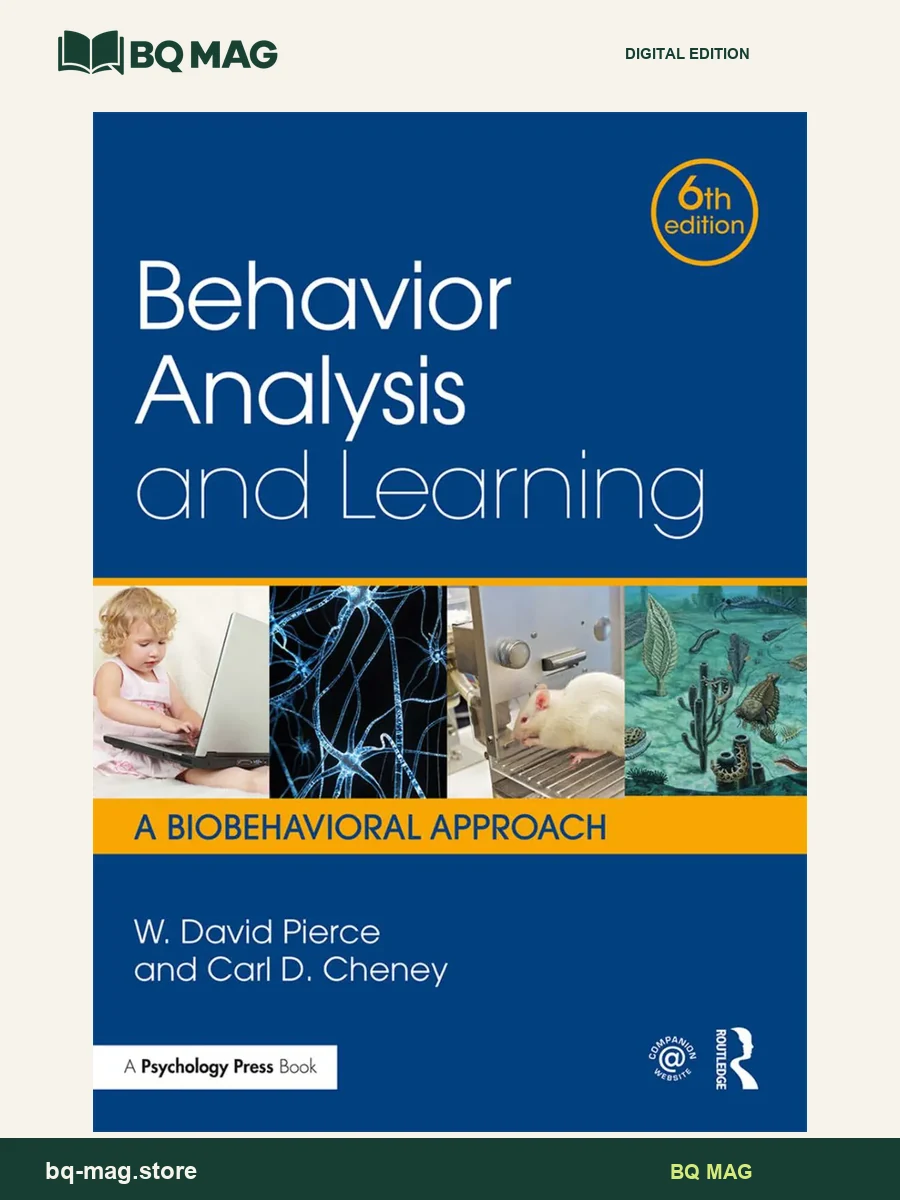
Behavior Analysis and Learning: A Biobehavioral Approach, Sixth Edition by W. David Pierce and Carl D. Cheney offers an advanced introduction to behavior analysis and learned behavior. The authors present behavior through a consistent Skinnerian perspective while also drawing on biological, evolutionary and neurophysiological research. The sixth edition expands the discussion of how these fields connect with experimental analysis, helping readers consider behavior at environmental, genetic and physiological levels.
Principles, mechanisms and applications
The early chapters set out the history and assumptions of behavior analysis, then introduce respondent and operant learning. Later topics include reinforcement and extinction, schedules of reinforcement, aversive control, stimulus control, choice and preference, and the relation between behavior and biological context. The publisher and contents also point to applied behavior analysis and cultural design. Special sections such as “Focus On” and “On the Applied Side” provide additional context around selected concepts, while chapter structure supports a systematic course through the material.
For advanced study
The book may suit upper-level students, graduate learners and researchers who want a deeper account of behavior principles than a short introductory survey. Its biobehavioral approach can help readers connect observable learning processes with biological and neurophysiological explanations without treating them as separate topics. Instructors can use its progression from foundational assumptions toward advanced applications to organize discussion and reading assignments. The book is theoretical and educational; it does not replace professional supervision or individualized assessment in applied settings.
Edition and file checks
This listing presents Behavior Analysis and Learning: A Biobehavioral Approach, Sixth Edition as a PDF ebook. Four sample images provide a quick look at the page layout before you choose. Compare the title, author and edition with your course or reference list, and check that the file format works with your reading app. Publisher platform access, courseware, access codes and companion resources are included only when specifically stated with this product.
To explore subjects adjacent to Behavior Analysis and Learning: A Biobehavioral Approach, Sixth Edition, browse psychology and human development collection and the wider ebook catalog collection.
ISBN and edition details
ISBN for this edition (reference): 9781138898585
This identifier belongs to a published version of the matching title/edition. A format-specific ISBN for the supplied PDF has not been independently confirmed.
Samarth S. Bhatt –
Excellent Ebook!
JS –
This text ebook is so dry compared to the texts with glossy pictures and interesting stories. Well written but hard to get excited
Eli Allen –
I used this textbook (and still own the fifth edition) for my Behavior Analysis and Learning college course back when I was in an ABA certification pre-master’s program a few years ago. It’s an excellent textbook as it’s easy to understand even on the undergraduate level and is more accurate than most other undergraduate textbooks on Behaviorism and conditioning/learning. I just wish in the glossary, it specified that “Radical” Behaviorism is “the scientific philosophy of Behavior Analysis”, included the term “Functional Behavior Assessment” describing the functions/causes of behavior — attention seeking, escape/avoidance, sensory stimulation, or tangible access to an activity, added Counterconditioning, Systematic (or Contact) Desensitization, and Schoolwide Positive Behavior Support. Lastly, in the final chapter on ABA, I wish it also discussed how the Behavior Analyst Certification Board only allows you to work with humans and that ABA is called Applied Animal Behavior when working with animals and those who practice this technique are called applied animal behaviorists, a field regulated by the Animal Behavior Society (and augmented the term “Applied Animal Behavior” in the glossary as well).
Craig Jensen –
A great synthesis. Very impressive. If you want to know anything about the experimental analysis of behavior (EAB) and its foundations for applied behavior analysis (ABA) it’s probably in there.